
Most parents who homeschool are determined to help their children become stronger, healthier, and happier human beings.
I'm betting you're no different.
But you may be feeling stuck when it comes to incorporating P.E. into your curriculum. Maybe you, like me, hate the idea of running or can't play sports to save your life.
Winter presents its own challenges with super cold days and seemingly endless amounts of snow.
May I suggest incorporating yoga into your daily homeschooling curriculum?
I have loved doing yoga for the past three years. I can attest to its ability to create an overall feeling of mental wellness.
Let's explore the many benefits of adding yoga to your homeschool adventure!
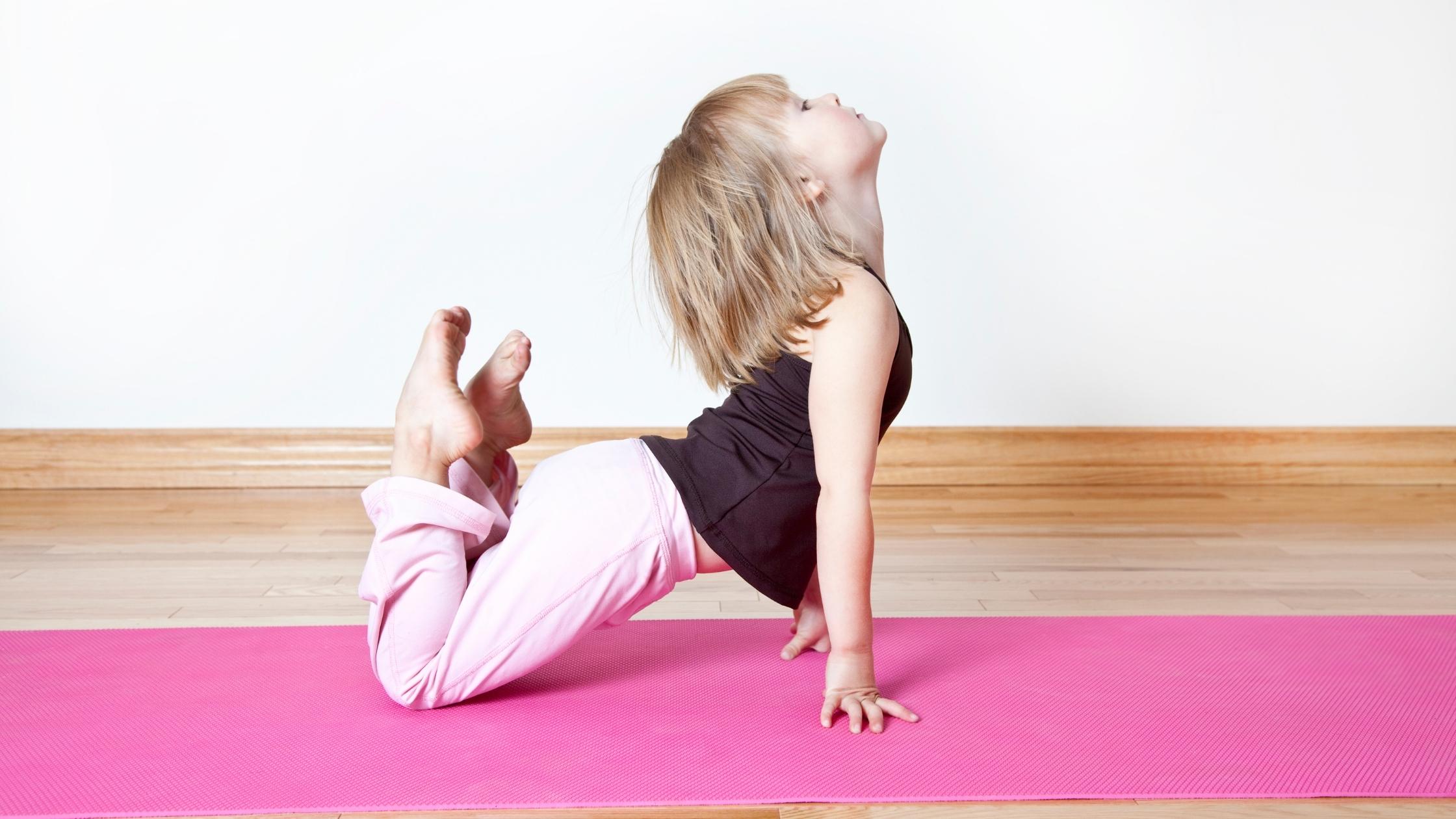
No Need for Fancy Equipment or Tons of Space For Homeschool Yoga
Yoga can be done using very little space.
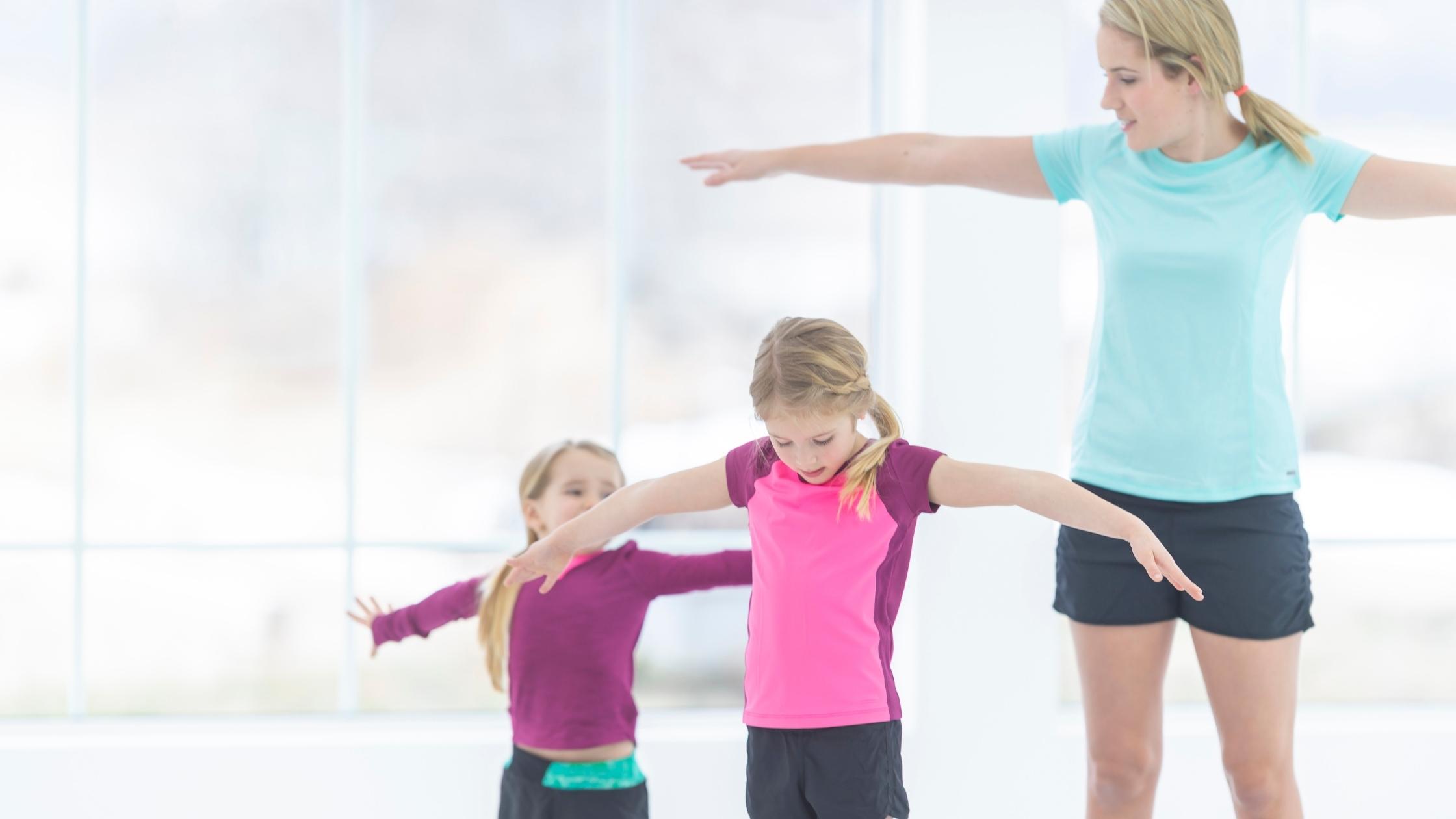
Make sure there is enough space for your child to stretch their bodies and have a wide stance for different poses, such as Warrior II.
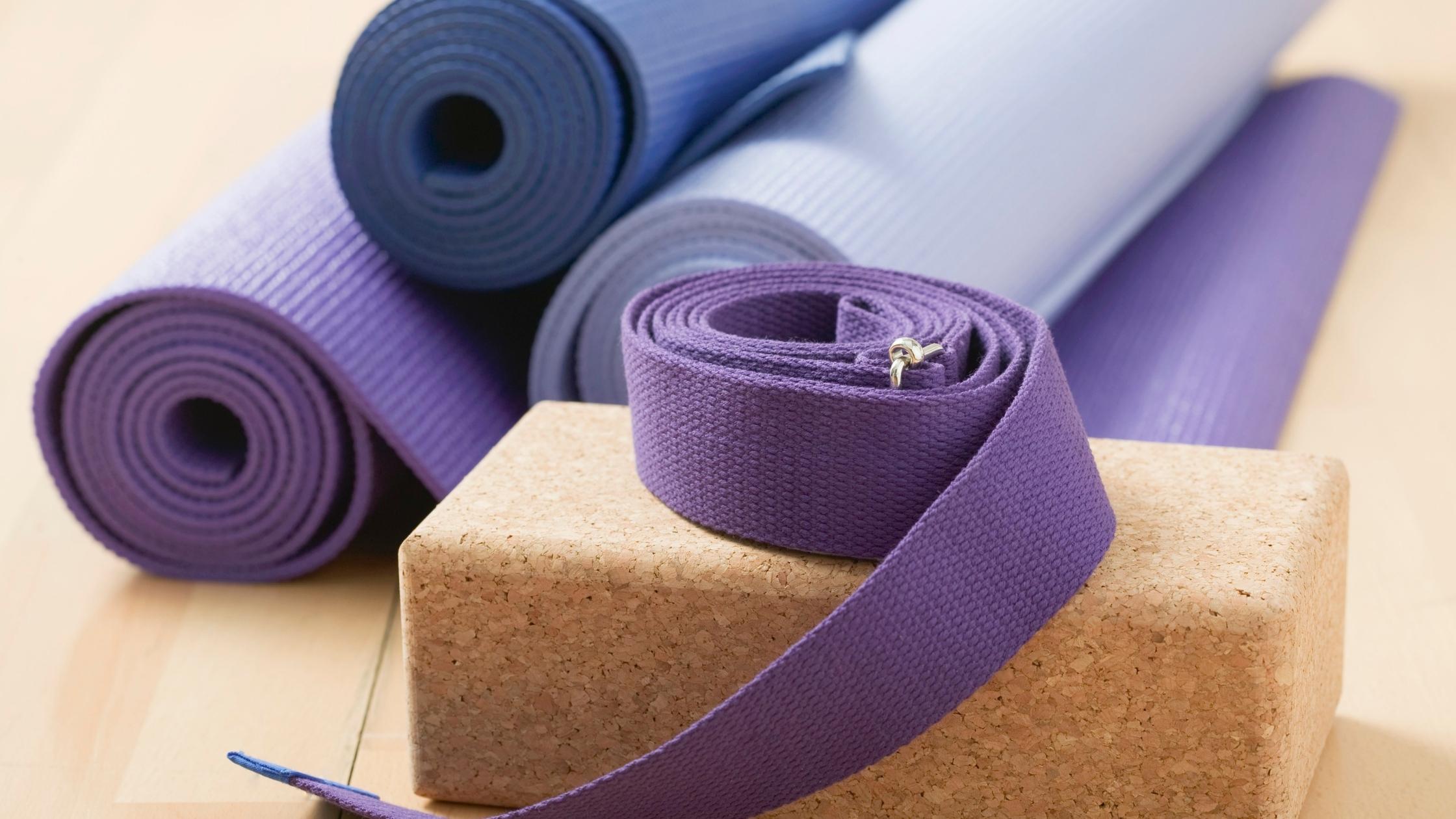
You will want to include the following equipment for your child to use and enjoy:
- Yoga Mat. I recommend getting a mat with plenty of cushioning since many yoga poses require being on your knees. Check out https//www.everydayyog.com to find mats with fun patterns like dinosaurs and llamas. You can also consider a Yoga Dot if a mat takes up too much space.
- Chime or small bell. For young children, this is a great reminder to get back on track. Even as an adult, I can tell you that the soft sound of a chime instantly reminds my brain to refocus. Give your child a chance to participate by allowing them to officially begin each session with a turn using the chime.
- Soft lighting such as LED fairy lights or a rock salt lamp creates a cozy environment encouraging your child to let their mind relax and focus.
- Nature sounds. A lot of yoga poses will incorporate elements of nature, like wind, trees, or water. Popular streaming services offer a wide range of nature sounds. Consider playing a recording of wind rustling through the trees while your child does tree pose.
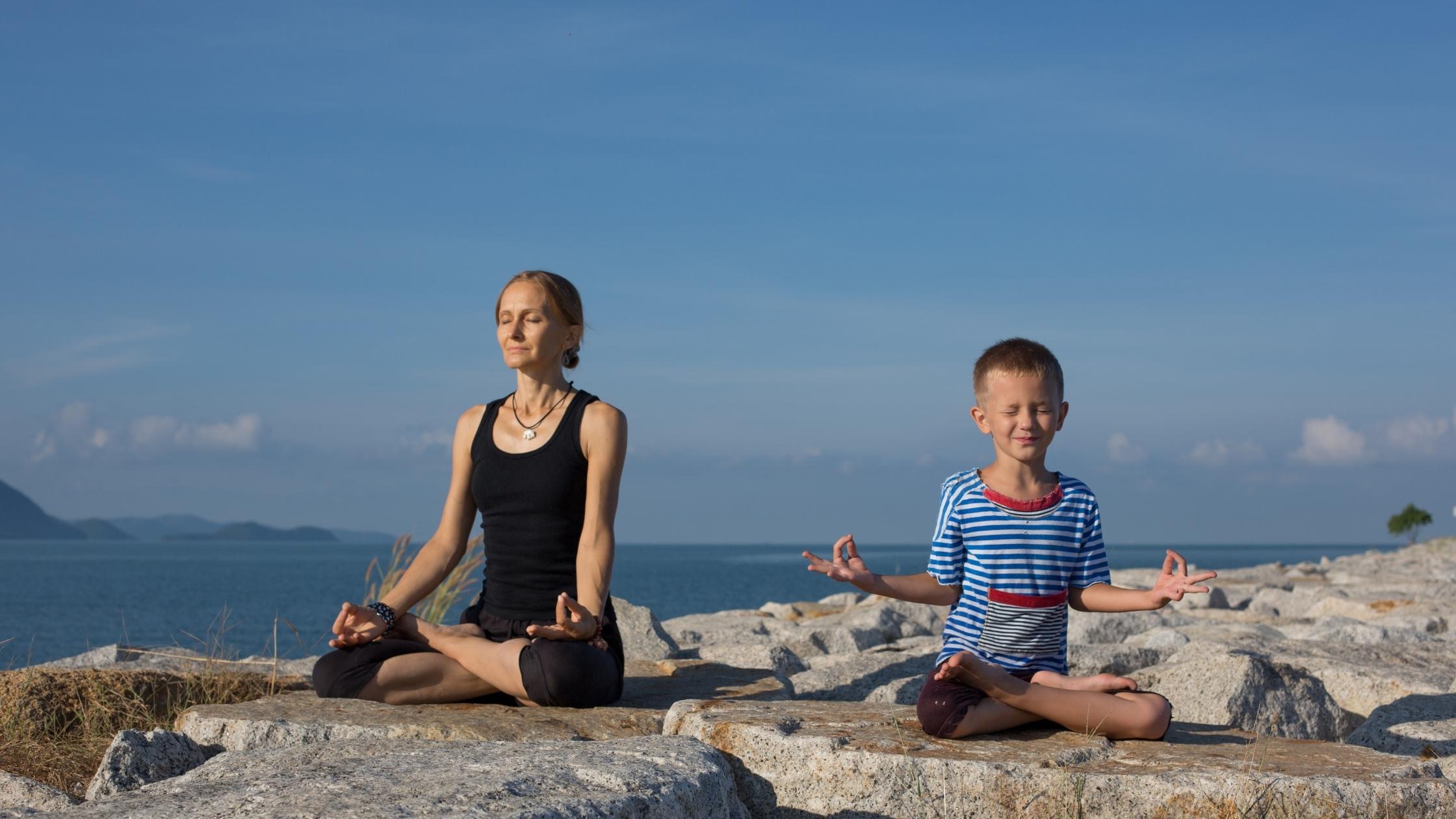
Yoga Great for Achieving Mind-Body Balance In Your Homeschool
I started doing yoga about three years ago, once a week at an informal class my friend offered.
I've always battled a certain amount of anxiety.
When I first started practicing yoga, it felt challenging to calm my mind down. But as I kept practicing, it felt as though the ability to bring my mind into focus became easier.
Children are not immune to anxiety.
Practicing yoga every day, even if it is only fifteen or twenty minutes out of your day, gives your child a feeling of calm and peace.
My yoga teacher often reminds us to leave our mental burdens at the door. She gently tells us that we can enjoy this time and space with our mat.
Through the last three years of practicing yoga, that hour when I am entirely in the present moment is a gift I treasure.
As adults, we often find ourselves becoming caught up in the past or the future. We worry. We regret.
But yoga has the unique ability to anchor us fully in the present. I can think of no better gift to give a child, or yourself for that matter.
Every child is unique and will benefit from a different approach.
But for all children, the gentle ritual of mindful, deep breathing can be a great way to relax their bodies.
As they grow older, the ability to calm themselves through mindful breathing will help avoid a careless word or a quick reaction that can harm their career or relationships.
Every week my yoga instructor also builds mindfulness into our practice. We do what is called a flow. Basically, this is moving through a series of poses.
Our flow ends with our arms reaching towards the sky. We are reminded to thank the Universe for our gifts, our feet moving our bodies, the many tasks our hands do every day or the warmth of the summer sun.
I love this moment. It is a reminder that there is always a reason to be grateful.
You can easily build this into your own yoga routine with your child.
It doesn't have to be the same or even feel as formal. It can be as simple as asking your child to think of one thing they are happy to have or do.
Research has proven time and again the mental health benefits of carrying an attitude of gratitude.
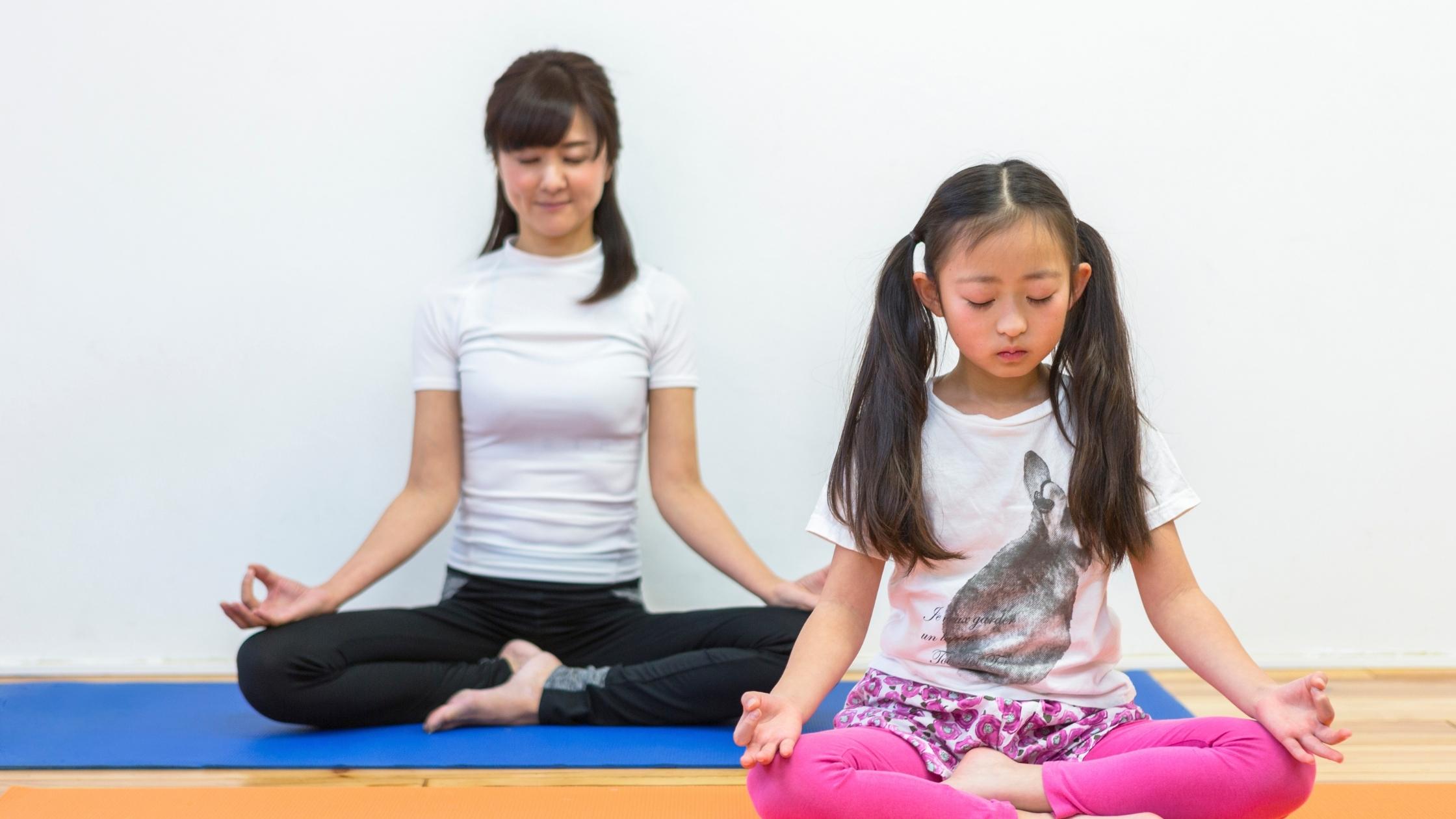
Yoga Develops Important Body Awareness & Stress Coping Skills
Yoga encourages children to be aware of what their bodies are doing.
They must make sure their wrists are aligned with their shoulders during plank pose. During Chair Pose, they must tuck in their "tail" or their bottoms to be more accurate.
For many children, being aware of their bodies is an important skill that helps them develop better control over gross motor skills, like kicking a ball.
Many poses require you to be mindful of your feet. We are often encouraged to fully engage our legs during some poses.
Your child will also be more aware of their body as they create a straight line during Triangle Pose or arch their back during Cat-Cow Pose.
One of my favorite parts of my weekly yoga practice is the very end. I can honestly say that I am more aware of every part of my body.
Developing a mind-body connection will allow your child to be more aware of when they are holding stress in their body.
There are many times when I've done stretches targeting one part of my body and realized how much stress those muscles were holding.
This ties into self-care.
We can only acknowledge and deal with stress when we realize it's there. As children grow, they will have to learn how to check in with their own bodies.
Beginning a yoga practice early in life can help your child develop healthy, nurturing behaviors in response to stress.
The purposeful movements and stretching in yoga will encourage them to be self-aware enough to avoid burnout because of stress and anxiety.
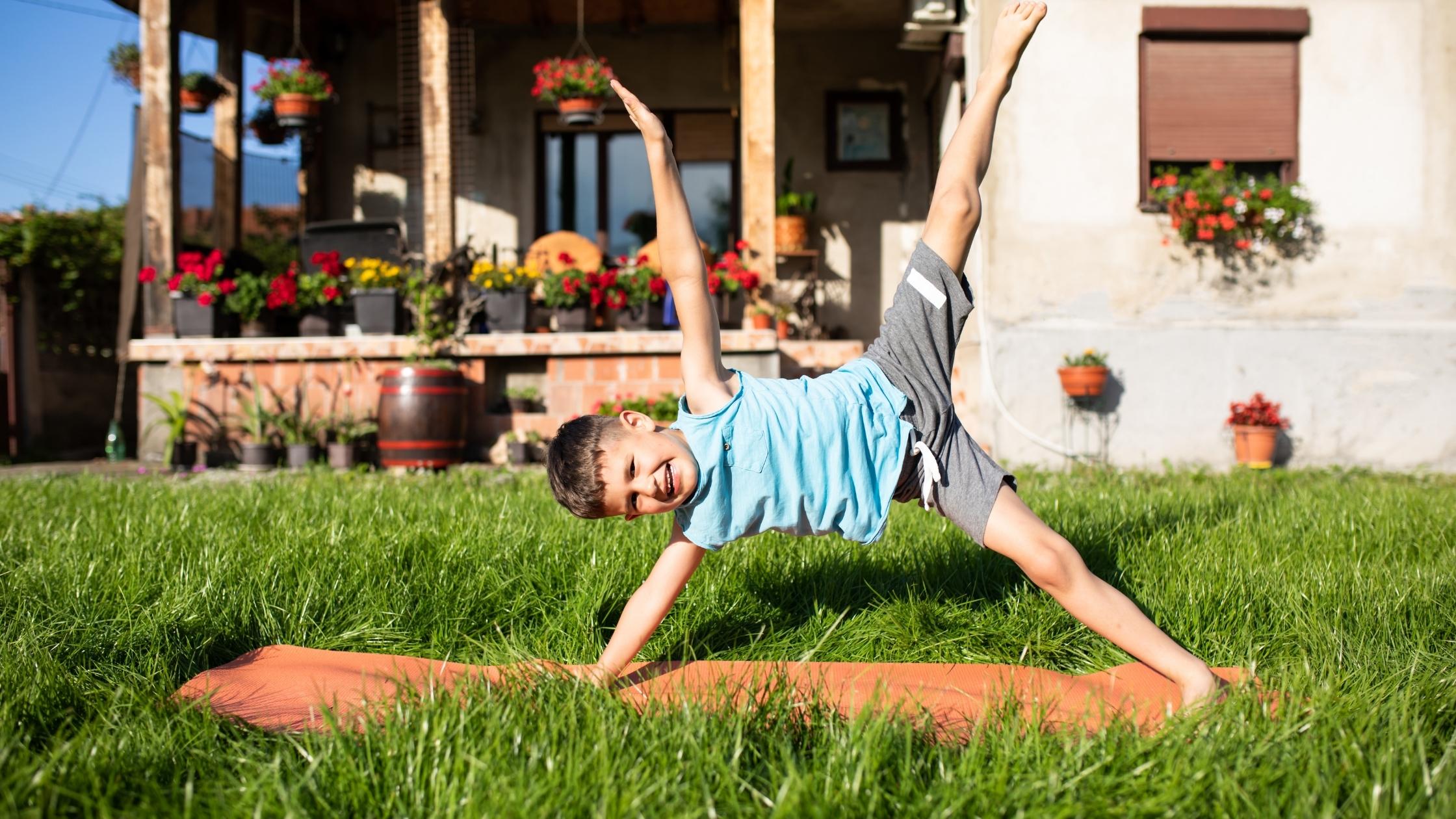
Yoga Integrates Beautifully with Your Homeschool Science Curriculum
As a homeschooling mom or parent, you are excited to teach science to your kids. But like anything else, children must feel interested enough to fully engage in the material.
Yoga can be integrated with your science curriculum easily. Use yoga as a springboard for teaching children more about their bodies.
Children love to learn about themselves.
For very young children, start a discussion about what happens to the air they breathe in. Where does it go?
Introduce them to the concept of muscles being attached to their bones. Ask them what might happen if they didn't stretch their muscles.
There are times when I have done specific stretches and can feel the warmth in my arm or my leg after doing a stretch. Point out this feeling to your child.
Your child may be too young to understand blood vessels, but they can understand the physical sensation of warmth in their arm.
Many yoga poses are named after animals. Young children love to pretend.
Start your science lesson with an animal pose, such as Cobra Pose.
Begin a conversation about how their body moves in Cobra Pose. Was their spine straight or curved? Were they on their belly like a Cobra?
You can do this with Tree Pose as well.
Use this pose to ask your child how a tree stays in the ground. Ask them what kind of animals they might pretend are living in their branches. Is there a bird building a nest?
Have fun and open your imagination.
Great Resources for Yoga Supplies
(not affiliate links)
There are many supplies available online to supplement your yoga curriculum.
Colorful posters are a great way to show your child many of the most essential poses used in yoga.
Check out https://www.abebooks.com to find The ABCs of Yoga for Kids poster and another great resource, Yoga Pretzels: 50 Fun Activities for Kids & Grownups. This colorful deck has a lot of easy yoga poses for young children that can easily be used at the beginning or even the end of a lesson.
Lakeshore Learning also offers a deck of colorful cards with different yoga poses for young children. For children in the PreK thru 3rd grade age ranges, introducing simple poses is the best way to begin yoga. Don't get too hung up on doing a super structured hour-long session. You want your child to have fun and get the benefits, gentle stretching, balance, and mindfulness.
Other online resources you can take advantage of can include:
YouTube. Search for simple yoga routines geared towards young children.
A simple search of "yoga flow for children" or "yoga for kids" will yield a lot of great workouts for young children.
Gaiam. This company offers a lot of yoga mats designed for kids.
Consider getting a colorful book to help create short yoga workouts for older children who benefit from a 30 to 60-minute session.
?Yoga for Children: 200 + Yoga Poses, Breathing Exercises, and Meditations for Healthier, Happier, More Resilient Children? by Lisa Flynn available on Amazon.
To create a little bit of fun, you might want to purchase some Harem Pants for your child. These pants are made by Bohemian Island and have some beautiful, fun patterns.
Incorporate Yoga Into Your Homeschool!
I hope you and your child discover a love for yoga.
I honestly believe this type of exercise is one of the best available for creating mindfulness in young children.
Your child (and you!) will also develop greater flexibility, stability, and self-confidence, plus a deep understanding of your bodies.
Add to that the lifelong benefits of calmness your child will enjoy and it?s a win-win.